
Article
Apr 2, 2026
Is a toxicology test for category A and B driver’s licenses now mandatory? Find out everything!
Learn about the new drug test rule for Category A and B driver’s licenses, what changed in Law 15,153, and how to get your first driver’s license step by step.

Toxicology testing for Category A and B driver’s licenses is now mandatory for those seeking their first license in these categories, and this change has raised questions for thousands of Brazilians who are starting the process to drive motorcycles and cars.
The update came with Law 15,153/2025, which expanded the toxicology test requirement—previously mainly limited to Categories C, D, and E—to also include first-time licensing in Categories A and B.
In today’s article, you will understand what a long detection window toxicology test is, what changed with the new law, how the step-by-step process works to get your first license starting in 2026, and where to take the test. Enjoy your reading!
What is a toxicology test
The CNH toxicology test is a laboratory test that identifies the use of psychoactive substances over an extended period.
Unlike blood or urine tests, which detect recent consumption, the long detection window test—performed with hair or body hair samples—can indicate drug use over a period of at least 90 days.
The procedure is quite simple: the applicant goes to an accredited collection site, where a small amount of hair or body hair is collected.
This sample is sent to a specialized laboratory, which performs toxicological analyses using validated methods recognized by regulatory authorities. The analysis looks for substances such as amphetamines, methamphetamines, cocaine and its derivatives, opiates, among others.
In the context of first-time licensing, the Category A and B toxicology test now becomes part of the legal requirements to ensure that new drivers are fit to drive without a recent history of substance use that could impair reflexes, attention, and judgment.

Why is the toxicology test important for the first Category A and B license?
The expansion of the mandatory CNH toxicology test to first-time Category A and B licensing was justified by lawmakers as a preventive measure and a way to strengthen road safety, aligned with the goal of reducing accidents and promoting responsible driving (Law No. 15,153/2025 – Planalto).
Among the main benefits and impacts of the new requirement, the following stand out:
Prevention of accidents associated with psychoactive substance use;
Greater responsibility in the licensing process from the outset;
Standardization of requirements across categories;
Encouragement of a conscious driving culture;
Increased traceability and regulatory control.
The Category A and B CNH toxicology test requirement is not punitive, but preventive. By including the test in first-time licensing, the traffic system begins acting before the driver is effectively on the roads, strengthening public safety policy.
CNH toxicology test: what changed with the new Law?
Before Law 15,153/2025, the CNH toxicology test was mandatory mainly for drivers in Categories C, D, and E, both for first-time licensing and periodic renewals. These categories include professional drivers of trucks, buses, and cargo and passenger transport vehicles.
With the new legislation, the requirement was also extended to first-time licensing in Category A (motorcycles) and Category B (cars). In other words, anyone getting a CNH for the first time in these categories must present a negative toxicology test result before completing the licensing process.
The change follows a broader movement to update traffic rules in Brazil, seeking to align requirements and reinforce safety from the beginning of a driver’s life.

Step by step to get your first CNH starting in 2026
With the inclusion of the Category A and B CNH toxicology countertest, the process for obtaining a first license now has an additional mandatory step. Even so, the overall flow follows the traditional structure established by state Detrans.
Below, you can find the updated step-by-step, based on consolidated guidance from the licensing process. Let’s go?
Step 1: Check the initial requirements
The applicant must be at least 18 years old, able to read and write, and present an identity document and CPF. It is also necessary to register with your state’s Detran.
Before starting theoretical classes, it is essential to confirm all local requirements with the state Detran, as some operational details may vary.
At this stage, the applicant also formalizes their enrollment in the licensing process and begins registration in the system.
Step 2: Take the required exams
This is where the Category A and B CNH toxicology test officially comes in, along with the medical fitness exam (physical and mental) and, when applicable, the psychological exam.
The toxicology test must be performed at an accredited laboratory, with hair or body hair collection, and the result must be negative for the process to move forward. The minimum detection window considered is 90 days.
Step 3: Registration and tests at Detran
The applicant takes all required theoretical classes at the Driver Training Center (CFC), followed by the theoretical test administered by Detran.
After passing the theoretical stage, practical driving lessons begin. The minimum number of class hours is defined by Contran standards. At the end of practical training, the applicant takes the practical driving test.
Step 4: Completion and issuance of the Permit
Once approved in all previous stages, the applicant receives the Permit to Drive (PPD), valid for one year. During this period, they may not commit serious or very serious infractions, nor repeat medium infractions. After the probationary period, the definitive CNH is issued.
Main questions about the new toxicology test Law for Category A and B CNH answered

The truth is that the expansion of the mandatory Category A and B CNH toxicology test has generated many questions among applicants and their families. Below, we answer the most frequent questions based on official information and current legislation.
Is the CNH toxicology test really mandatory? What is the Law?
Yes. The requirement is provided for in Law No. 15,153/2025, which amended provisions related to the licensing process.
The law expressly included first-time licensing in Categories A and B among the cases that require the exam. This means that, legally, the Category A and B CNH toxicology test is no longer a future possibility and has become a legal requirement tied to the first license issuance process.
Although implementation may follow administrative timelines in each state, the regulatory basis is already established in federal legislation.
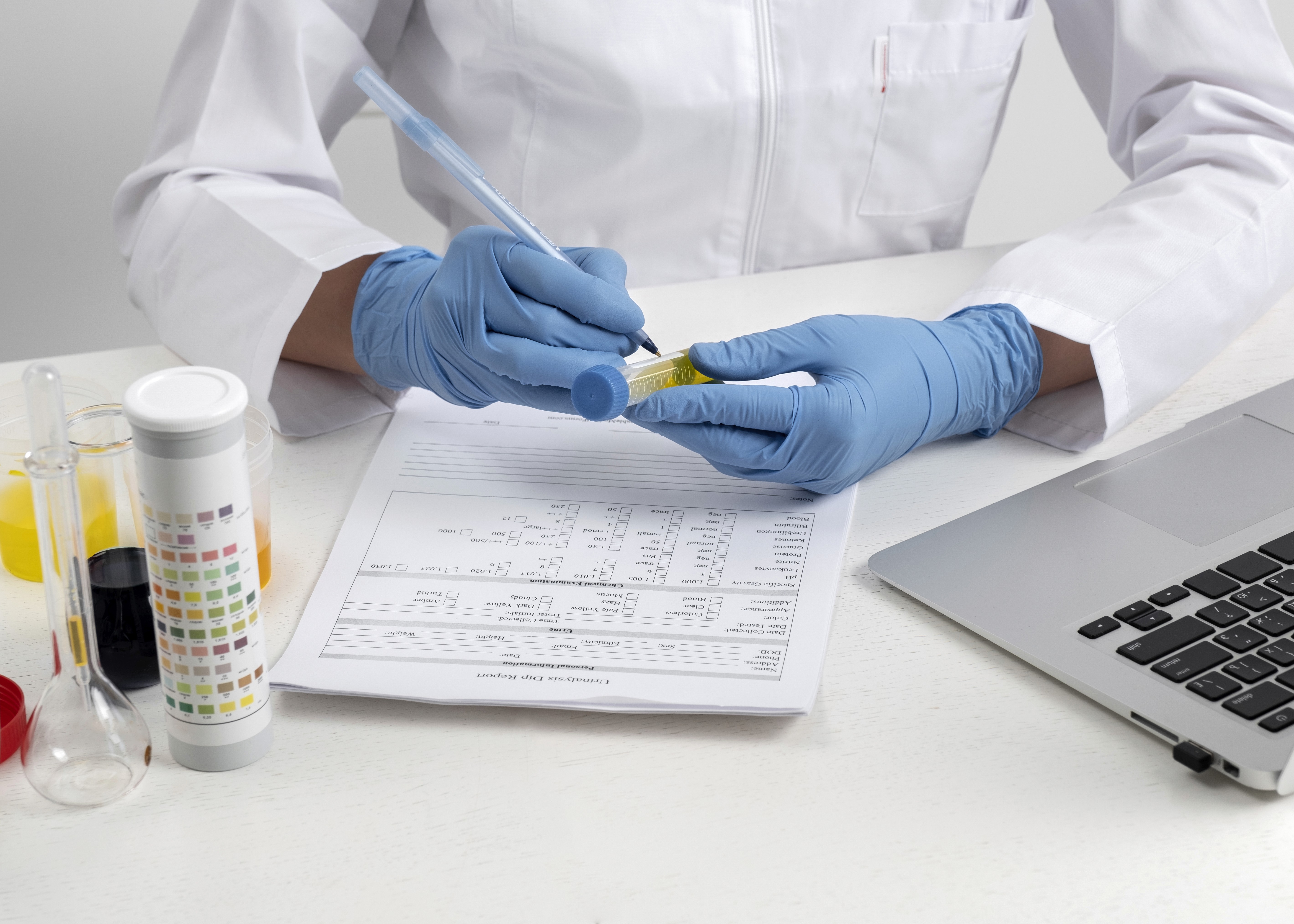
Who needs to take the CNH toxicology test?
An applicant obtaining a first-time license in Category A or B must present a negative CNH toxicology test result. Drivers in Categories C, D, and E remain required to take it, both for first-time licensing and renewals.
In practice, this decision broadens the scope of the requirement to a much larger public, including young people entering the licensing process for the first time.
The goal is to standardize criteria and establish a minimum toxicological verification standard from the start of a driver’s life, strengthening public road safety policies.
How does the Category A and B CNH toxicology test work? What does it detect?
The test uses hair or body hair samples and has a broad 90-day detection window. It identifies substances such as cocaine, amphetamines, methamphetamines, and opiates.
The analysis is performed in a specialized laboratory, following recognized technical protocols. Because it is a long-window test, the CNH toxicology test does not only detect recent use, but rather a usage history over recent months.
This technical characteristic is precisely what distinguishes this test from traditional urine or blood tests, making it more suitable for regulatory purposes in the licensing process.
Where to take the toxicology test to get a first Category A and B license?
The Category A and B CNH toxicology test must be taken at an accredited laboratory. Synvia, for example, has more than 3,000 accredited laboratories in all Brazilian states.
Seeking a laboratory with technical infrastructure, traceability, and regulatory compliance is essential to avoid problems in the process.
In addition, it is important to check whether the laboratory adopts chain-of-custody procedures, proper sample identification, and secure shipment to the analytical center. These precautions ensure the integrity of the Category A and B CNH toxicology test result and prevent delays or pending issues in the license issuance process.
Schedule your Category A and B CNH toxicology test at Synvia
Taking the CNH toxicology test in advance helps avoid delays in Detran’s timeline and allows the applicant to proceed calmly through the next stages of the process.
Tap the button below and register to choose an accredited laboratory that meets all legal requirements with safety and transparency.
________________________________________________________________________________________
REFERENCES:
BRAZIL. Law No. 15,153, of 2025. Amends provisions related to the licensing process and the requirement for toxicology testing. Brasília, DF: Presidency of the Republic, 2025. Available at: https://www.planalto.gov.br/ccivil_03/_ato2023-2026/2025/lei/l15153.htm
G1. Toxicology test for CNH: understand which drugs test positive and how detection is performed. Rio de Janeiro: Globo Comunicação e Participações S.A., Jan 16, 2026. Available at: https://g1.globo.com/saude/noticia/2026/01/16/exame-toxicologico-para-cnh-entenda-quais-as-drogas-dao-positivo-e-como-e-feita-a-deteccao.ghtml
EXAME. Toxicology test for first CNH still has no date to come into effect. São Paulo: Exame, 2026. Available at: https://exame.com/brasil/exame-toxicologico-para-1a-cnh-ainda-nao-tem-data-para-entrar-em-vigor/
CONTRAPROVA. Toxicology test for Category A and B CNH: law is published and takes immediate effect. Available at: https://exames.contraprova.com.br/exame-toxicologico-para-cnh-a-e-b-lei-e-publicada-e-entra-em-vigor-imediatamente/
DETRAN-RS. Licensing services – CNH. Porto Alegre: State Traffic Department of Rio Grande do Sul, n.d. Available at: https://www.detran.rs.gov.br/habilitacao-cnh/servicos/964